Posts

Showing posts with the label Soul

Track This: Wilson Pickett's "Cole, Cooke, & Redding."

Image
This lesser-known Wilson Pickett song is a eulogy to lost friends and fellow entertainers that influenced him. The 1970 song is the b-side to a fun, yet lightweight cover of the Archies's "Sugar, Sugar. "Cole, Cooke, & Redding" has a slower southern soul vibe than many of his big hits and is fairly reminiscent of Redding's sound. The thoughtful lyrics and music riff on Dion's "Abraham, Martin, and John,"a tribute to Abraham Lincoln, Martin Luther King, Jr., John F. Kennedy, and Robert Kennedy that Dion recorded in 1968 in a more upbeat manner. Dick Holler wrote the original song in reaction to the deaths of King and Robert Kennedy and is given song-writing credit for this one.  Pickett transforms the song in his inimitable style to remember these lost musical greats, referencing their lyrics and songs. In remembrance, he mentions the last thing they told him in song; for example, Sam Cooke tells him "that a change was gonna come," then...
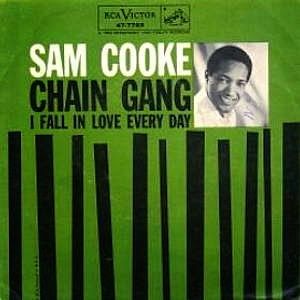
Track This: Sam Cooke's "Chain Gang" Live at the Harlem Square Club

Image
Spring and summer always puts me in the mood for Sam Cooke. I wake up most mornings humming a Cooke tune, hoping that my day will be sunny and bright or at least incessantly hummable.  I have still only worked my way through part of Peter Guralnick's well-researched Dream Boogie, which will unfortunately have to wait until after my exams in August but listening to these singles makes me want to jump back in. "Chain Gang" was a successful single for Cooke when he released it on on July 26, 1960, and it has become one of his most ubiquitous and well-known songs, as well as his first for RCA Victor after a stellar run on Keen records. The song's call and response chants are instantly recognizable, and, despite its theme, the song is typically upbeat; Cooke narrates the story of the prisoner's daily work lives, but allows them to hope as they slave away under the burning sun. Perhaps the song plays as a bit naive for modern audiences, but it still remains part of...