Posts

Showing posts with the label Richard M. Dorson

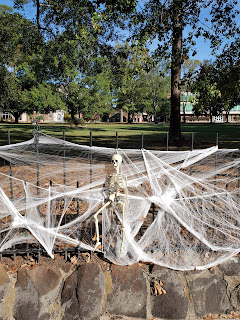
Halloween or Not: Folklore and The Lady in Black
Image
I do not have any assignments related to Halloween this semester, but my Freshman Composition class has focused on folklore readings, including an examination of Henderson State University's "Legend of the Lady in Black." I was looking for articles on folklore on college campuses and included part of a chapter on college student folklore from Richard M. Dorson's 1959  American Folklore.  They were surprised by the legends about paper grading and class attendance. For example, many students believe in the fifteen-minute rule that you are excused if your professor shows up after the first fifteen minutes are over. I have never tested this one because I am usually prompt. I told them that I had often heard about the process of throwing tests and papers down the stairs and giving them grades based on how far the papers sailed when I was an undergraduate. The idea is that professors grade papers by tossing them down the stairs and determining grades based on their position...

Folklore and Fakelore: Paul Bunyan and the American Past

Image
When I was a kid, we would often go for dinner at Paul Bunyan's Cook Shanty in Minocqua, Wisconsin. I marveled over the large slices of white bread with butter, the tin cups filled to the brim with milk and water, and the manufactured ambience of the old lumber industry that covered the walls. I loved that place and still do; there was something about it that dredged up old memories, remembrances of a past that never existed merging with a real past. The lumber industry was a major part of American history as the demand for timber rose in parts of the country that had little access to giant timber. At its peak, in 1900, annual production of lumber reached around 35 million board feet and the Midwest was depleted of much of its virgin timber. Major industries, such as railroad and coal mining, depleted resources as the nation entered a period of expansion and technological development after the Civil War. Lumberjacks maintained a sense of identity and traditional pride even...